Sunday, July 12, 2015

the cure for sagging spirits

I did it. I admit it. It was impulsive, and self-indulgent, and expensive, but I registered for yet another writing conference. This one has nothing to do with the techniques of good writing, or how to build your platform, or how to get published. This is one of those inclusive, feel good, empowering workshops that is intended to bolster sagging spirits, and re-animate creative energy among a small group of like-minded souls.

Did I say sagging spirits?

I think I did. It happens to all of us from time to time. It’s the price we pay for loving others, for caring about them, and for dreaming about an uncertain future. It’s the burden of disappointment, frustration, and rejection that drags us down. Sometimes we just need a little “pick-me-up,” or a little something to “settle-me-down.” Or both.  Something to motivate or inspire us. Affirmation. Acceptance. Encouragement.

I have attended a number of excellent motivational and inspirational workshops since I started writing. “The Artist’s Way” with Julia Cameron was my favorite...


 but I also enjoyed “Do You Wish You Could Write?” with Lynda Barry... 


...as well as “What Is This, A Spiritual Quest?” with Sue Rumbaugh, and “Mindful Writing,” with Madhu Wangu, Ph.D. I came away from these sessions  ready to “begin again,” impatient with new ideas.

But it has been a while since I indulged myself this way. I haven’t felt the need to be encouraged or energized. That’s how feel every time I sit down to work. I can’t wait to get started in the morning, and I tend to have two or three projects in mind at all times. Writing is the easy part. But life itself?  Sometimes not so much.

So, I’m going off to my favorite place, Omega Institute (www.eOmega.org)...

...for five days in mid-October just about the time Mother Nature drapes herself in glorious shades of red and gold. The retreat is titled "Writing from the Heart,"


 and it will be led by Nancy Slonim Aronie, author of the book by the same name.

www.berkshirewomenwriters.org


I’m going for no better reason than to humor myself, to restore what is depleted, and to gather courage for the journey.

What do you do to revive your sinking spirits? What are you waiting for?
*
“Good writing is not about good grammar.
Good writing is about Truth.”
~Nancy Slonim Aronie~
*
Last week I was grandson sitting...

Caleb

...this week I'm grand-dog sitting:

BK
although I'm not sure the word "sitting" actually applies here...

Have a great week!
jan

Sunday, July 5, 2015

how to banish boredom for good

Stephen King put it nicely:


There's just one problem with that: making enough time for both reading and writing. Plus work (unless you're independently wealthy and don't have to earn a living, or, like me, you're lucky enough to be retired). Plus making time for family and friends. Plus keeping up with the house and yard work, and making time to exercise on a regular basis. Plus, plus, plus...

And, I don't know about you, but I usually have more than one writing project underway at a time, too. I'll work on a book-length manuscript, and then a start a short story or an essay to play with when my brain turns to mush. Right now I'm revising the book proposal for Ten Faces of Faith, while I play with an idea for a flash fiction piece. I journal daily. Plus, I write this blog every week. It all takes time.

Likewise, I find myself reading several books at a time. If one is deep enough to require concentration, I'll pick up something light or entertaining as a diversion. Right now I have three books underway:


I ordered the big, heavy book on the bottom of the pile after hearing Diane Rehm interview the author on NPR a couple of weeks ago. I thought it would be the perfect thing to read on my trip to Dallas--the neurophysiology of meditation and it's role in cultivating compassion. I didn't notice the page count when I ordered it, so it surprised me that it weighed in at 693 pages, much too heavy to lug around four different airports! Instead I packed up Anna Quindlen's Loud and Clear, a collection of engaging and humorous 2-3 page essays on life. The Workaholics book? Well, that's personal...

I also have a pile of books in my to-be-read pile, all of them clamoring for my attention:


And then there are a few books I want to re-read:


There should never be a dull moment in the life of a writer. If we make time for all we need to get done in a day, all we want to accomplish, and all we wish we had time for, like this "little guy"...

Caleb

...the word "boredom" will never be a part of our vocabulary.

What's a person to do??
*
"Nothing you do for children
is ever wasted."
~Garrison Keillor~
*
Have a great week!
jan

Saturday, June 27, 2015

why you must read "The Far End of Happy" by Kathryn Craft

In the interest of fairness, I decided I should try reading a few things out of my usual comfort zone--literary fiction, memoir, creative nonfiction (you know, serious stuff)--and give something else a chance. So I picked up a mystery and a mystery-thriller by two well-known and multiple award-winning authors...who will remain anonymous.

I finished the first one and found it very well written with plenty of plot twists and authentic characters. Still, it left me feeling, meh...

I plunged into the second one, the thriller, with high expectations. It, too, was well-written. But, again, the multiple plot lines, intertwined characters, and rising tension left me feeling: so what? I got to within twenty pages of the ending...and I simply set it aside. I just didn't care how it ended after all that. Really??

Questioning my sanity, I then turned back to literary fiction with Kathryn Craft's newest release, "The Far End of Happy", a literary novel that fictionalizes a painful episode in her own life, a heartbreaking suicide standoff with her husband.


I know the real story behind it because she has shared it in several of her workshops. She wept when she talked about it, and we wept along with her. This book was a long time coming.

So, this is the thing. Craft nailed the experience of every woman who has ever struggled to maintain a semblance of normalcy for her children as the victim of an addicted spouse. In this story, the dreaded "dual diagnosis" was bipolar disorder complicated by alcohol addiction that proved to be a deadly combination. In real life, the reader can totally identify with the inner dialogue of the protagonist. Her courage and fortitude are enviable. The characters who interact with her during the crisis are believable, and the tension rises little by little all the way through the story until--BAM--it happens.

I ached as I read this book. Anyone who has attempted to distance herself from an abusive marriage, been manipulated by the threat of a spouse's suicide, or succumbed to the ill-informed advice of well-intentioned friends and family members should read this book. It tells the story of a memoir that would otherwise be too painful to put into words.

So what was missing for me in the mysteries? There was plenty of action and tension, good crisp dialogue, and rapid pacing, but what I missed was the inner dialogue expressing emotion and reaction--fear, confusion, grief (people were murdered, after all), and betrayal--emotions I might have identified with had they been expressed. As it was I couldn't identify with the characters. Nothing felt familiar.

The mysteries will soon go off to a book sale, while I re-read "The Far End of Happy."

A round of deep appreciation goes out to Kathryn Craft for her courage, perseverance, and verity. Thank you!
Kathryn Craft
*
"I am not what happened to me.
I am what I choose to become."
~Carl Jung~
*
Please excuse the appearance of this post. Blogger is being oppositional-defiant this week, and there's nothing I can do to fix it. Thanks.
jan


Sunday, June 14, 2015

how to rule the world


I've been writing...or at least working at it...for a good seven years now. During that time I've amassed a small fortune worth of books on writing, covering everything from grammar and punctuation, to plotting and character development, to inspiration and motivation. A quick count today came to over 75 books on writing...at which point I gave up.

You get the picture...
Here are a few things I've learned:
  • According to Stephen King:
www.pinerest.com

To which I would add, read like a writer. Pay attention to what draws you into a story and keeps you there. Take note when you have to turn back a few pages to check on a fact or to recall a character. Then avoid anything that takes your readers out of the story when you write. If you have a question about punctuation or dialogue, study how it's handled in the book you're reading. Scribble in the margins. Takes notes. Then apply what you've learned to your own writing.


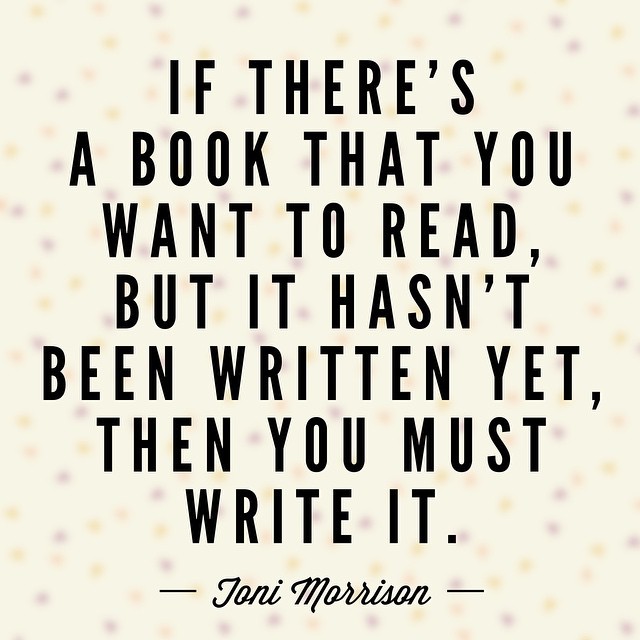
  • From Toni Morrison I learned: 


www,teralynnchilds.tumblr.com


Meaning, write like a reader. First and foremost, write the truth as you know it. Learn what makes a good book cover and title--the reader's first encounter with your writing. Then give your intended audience what it wants to read. Do whatever it takes to engage the bookstore browser in as few words as possible. Write what you want to read and compel your audience to read it, too.
  • At some point you must begin.
www.theslaingod.tumblr.com
  • Get all the feedback you can. Join a critique group or two or three. Get thee to a good writing conference at least once or twice a year. Connect with other writers. Embrace revision.

  • Keep at it until you finish. According to Neil Gaiman:

www.pinterest.com

Sounds simple enough.
  • Put it out there. Don't even think about slipping your manuscript into a drawer somewhere. Remember:
www.pinterest.com


So, there you have it--all you need to know to get started in writing. Enjoy the journey!
*
"It ain't whatcha write.
It's the way atcha write it."
~Jack Kerouac~
*
I'm off to Dallas this week. Hoping to make some big-time progress on my WIP. Research more than writing. Asking more than telling.
jan


Sunday, June 7, 2015

heresy, mutiny, treason for writers

I don't get it. Maybe I'm an indiscriminate reader, or perhaps, because I prefer to read and to write literary fiction, my tastes run counter to what is popular in the general population...the horror-thriller-fantasy lovers, and romance and mystery fans.

At the risk of coming off as a whiner, or ingrate, or worse, an uninitiated beginner at this, I have to question some of the conventional wisdom that is popular among today's literary agents, editors and publishers. No offense intended.

God knows writing a novel is hard enough without having to navigate an obstacle course in the process. Let's take a look at three of those obstacles, a.k.a. conventions of writing:
www.affordableagility.com

  • Rule #1-The opening scene of the novel: We are told never, and I do mean never, open a novel with a description of the weather, with a funeral, a dream sequence, or a character waking up to an alarm, among others. Frankly, I don't see the problem. As long as the writing is beautiful and engaging, and leads the reader into the story, what does it matter? I don't need to be frightened or mystified or left breathless by an opening scene. Remember, some of us have been on our feet all day. When we sit down to read at night the perfect opening might just be snow falling gently on a calm, moonless night.
www.twincities.com
 Ah-h-h...

I understand that weather can be important to a novel if it serves as an obstacle to the protagonist's goal, or if it foils the enemy's escape, but it also creates setting and mood. One of my novels opens: 

"The North Atlantic seaboard in February is reminiscent of a Soviet gulag except that here people endure the torment by choice—the gusty wind, the perpetual gull-gray haze, and snow that freezes into a sooty crust. It’s enough to keep a person under the covers all day long. Sadly this isn’t an option for me today. I have to be on my feet before daybreak and out the door before rush hour, before hospital rounds. Before all hell breaks loose."

My bad.
  • Rule #2-Never use cliches. Personally, I love an occasional cliche. It tells you so much in so few words. For  a example in the passage above, I use, "Before all hell breaks loose," to describe what my character expects is going to be a terrible day. I could have said, "Before I get hopelessly behind schedule," or "Before the emergencies start pouring in," but all hell breaking loose encompasses every imaginable disaster. Bam! The worst day ever.
www.quotehd.com
  • Rule #3-Avoid words like very, really, even, suddenly, that, awesome, amazing, and actually. The list goes on. Eliminate adjectives, adverbs, and exclamation points. Limit dialogue tags to "said" and "asked." It almost makes you wonder what you have left to work with. Frankly, I don't have huge issues with any of those constructs, used in moderation. I love the image of the macho bad guy blubbering, "I give up." A "hideous" face leaves us to conjure up all kinds of blemishes and deformities. The writer doesn't have to describe every pimple, wart, and scar to get the point across. And, I think it's occasionally OK to...


The problem for aspiring writers is that violation of these rules may be cause for knee-jerk rejection...unless, of course, you're a NY Times best-selling author in which case, the rules don't always apply. You can get away with some of this because you write so well. Case in point.

What do you think? Should we--both the reader and the writer--be tethered to these rules? Do they go too far? Should some of the insurmountable obstacles to acceptance be lifted?

*
*

Last week I was in Nazareth, PA. This week it's Pittsburgh. Next week I'll be in Dallas. I love catching up with my family!


jan

Sunday, May 31, 2015

writing what disturbs you

I'm in the process of editing ten chapters contributed by friends and family that will appear in my WIP, titled "Ten Faces of Faith." All of them agreed to write out their stories for me, although none of them is a "writer" and I have asked them to do the hardest thing I know.

www.blog.abbottpress.com

I have asked each of them to revisit a painful episode in their lives (the death of a loved one, a terminal diagnosis, the descent into addiction, among others) and how it affected their faith. It forces them to relive the pain, to describe it, and to interpret it for the rest of us. It asks them to re-examine their relationship with God and to reflect on the purpose and meaning of pain in our lives. Not an easy thing to put into words.

www.buzzfeed.com

So now I'm sitting in the editor's seat for my own book...even though I don't have an MFA in anything. Nevertheless, I am aware of some of the literary conventions that hound contemporary writers, so I have been busy correcting the double spaces between sentences, and eliminating adjectives, adverbs, passive verbs, and exclamation points. I have been correcting spelling and usage errors. And I have been polishing the prose.


I hope they don't take offense when I hand them my rewrites. They'll have to learn to surrender to the new rules of writing the way I dideven though I may not have agreed with them at first. I had to train myself to avoid the beautiful, elaborate, flowery language I love. I had to retrain my ear to appreciate the rhythm and flow of a sentence in its crisp, clear form. I had to learn to show rather than tell. None of which they have the vaguest clue about.

www.baneofyourresistance.com

I'll tell them that the changes I made were not my idea, that this is how it's done nowadays. Things have changed. If I don't do it someone else will...but they won't be as kind about it as I will be.

My greatest challenge is to restate their stories without misinterpreting their words, or misrepresenting their emotional/psychological/spiritual journey, or violating their trust. That's the hardest part in all of this, and it's the most important.

www.heysugarsugar.wordpress.com

What is the hardest thing you've ever written? What is your story?
*
"Tell me your story,
show me your wounds,
and I'll show you what Love sees
when Love looks at you.
Hand me the pieces,
broken and bruised,
and I'll show you what Love sees
when Love looks at you."
~Mac Powell~
~from "When Love Sees You"~
*
People around here are starting to complain about the heat and humidity. I tell them I'm just happy to have thawed out...
jan

Monday, May 25, 2015

stories that are hard to imagine and impossible to tell

Here is what my father told me about his experience in WWII:

NADA.
NOTHING.

He never spoke of it. Everything I know about that chapter in his life I learned in disconnected sound bites from my mother over the years. My father's story, in his own words, is lost to me forever. Still, imagining the details would make for an epic historical novel:

"At his family's insistence, but against his will, a bright, handsome young man from America travels to Austria to begin his studies for the Catholic priesthood. WWII erupts. The Nazi invasion of Austria forces him back to the states where he enlists in the army. Soon he meets and marries the love of his life. Not three months later he is deployed to England where he rises to the rank of captain in the Army Signal Corps. His unit is assigned to decode top secret messages that have been intercepted from enemy spies. Although spared active combat, he is among the first American soldiers to enter the concentration camps on Liberation Day. He returns a different man."


Charles Richard Formaniak


The horror of the camps silenced my father. He had no words for what he witnessed there.

www.samm13.glogster.com

This is not uncommon among traumatized individuals--soldiers, survivors of natural disasters, victims of violence, etc. Their stories are painful to relive, difficult to share, and impossible to imagine--which is what the rest of us are pretty much left to do. Their silence is a tribute to the unspeakable reality they survived, and to the inner battle they continue to wage in its wake.

I wish I knew my father's story. I wish I knew what persuaded him to pursue the Catholic priesthood, and then caused him to turn away from his faith. How it felt to fall in love and then to be swept away into war. What fear, despair and loathing he must have felt, and how it changed him. How he kept his silence about it.

He didn't behave like a tormented soul, nor was he angry or violent. He was a gentle, kind, hard-working man who had a special fondness for nature. He never let his emotional or psychological scars show. He never told us his story.

Memorial Day is as emotional a day for me as it is for many, especially those who continue to grieve the loss of a loved one, or those who still suffer the after effects of combat. For me it remains an empty chapter that begs to be written but can't be imagined.

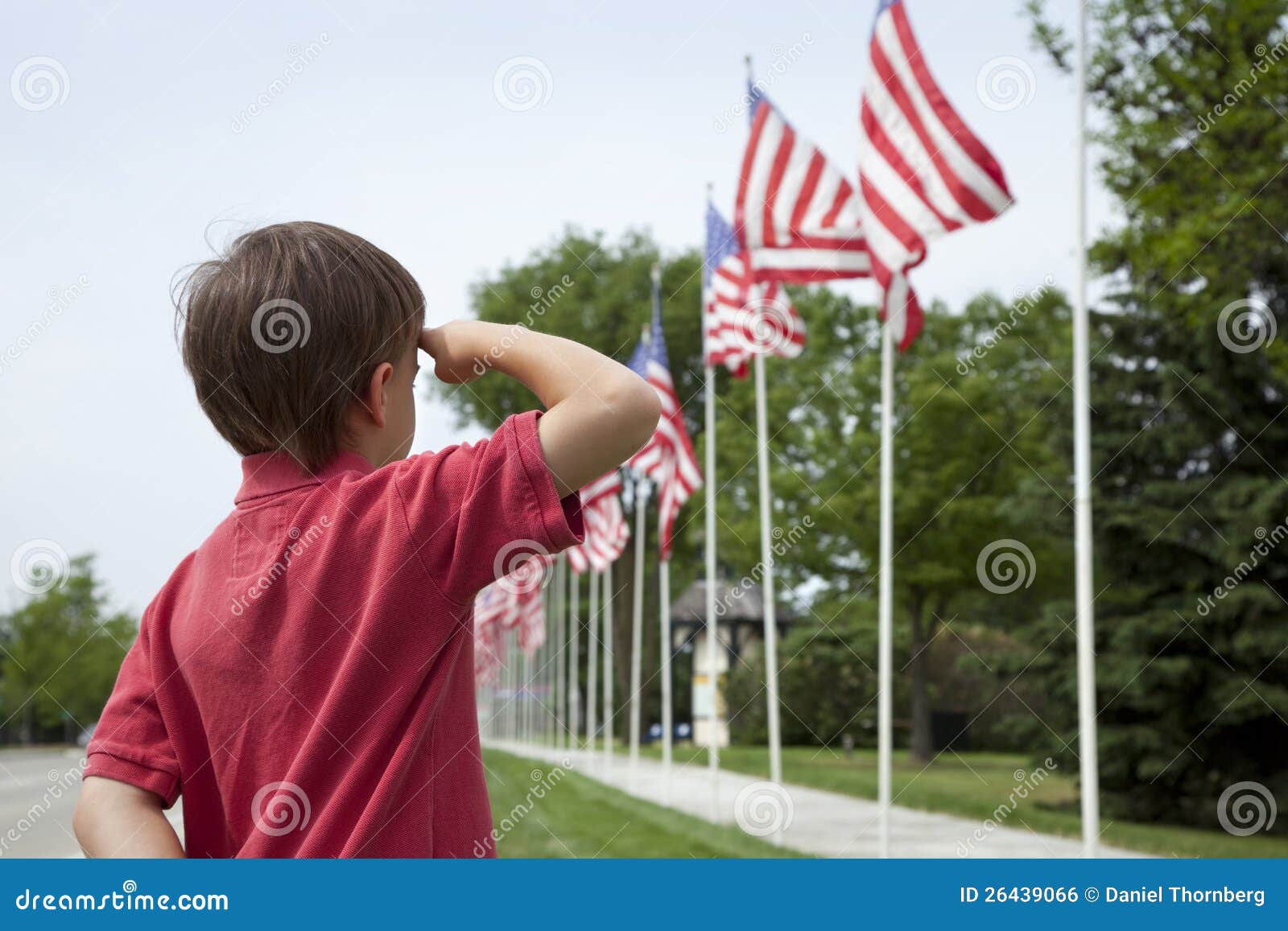
Whether you observe this weekend at the beach, a barbecue, or a ball game, take a moment to salute the courage and heroism shown by the men and women who protect and defend our freedom.


Reflect for a moment on the silence they keep, and what it means.

Remember this: Whether you know the story or not, everyone you meet is fighting a battle of some kind. War rages all around us whether we know it or not. Memorial Day is for all of us.
*
www.worldbeyondwar.org
*
jan