Sunday, July 29, 2012

embracing the essay

I'm still in recovery mode following the Mayborn Conference last weekend in Dallas! My brain is still mush. Never mind the fact that, due to weather related delays, numerous re-bookings of my flights and missed connections, I won an overnight stay in Detroit compliments of Delta Airlines...so, of course, I was sixteen hours late arriving in Dallas and two hours late for the conference on Friday morning. Mush.

If you write any kind of narrative nonfiction you should definitely consider attending this conference next year. For two days we were dazzled by Pullitzer Prize winning reporters, correspondents, film makers, and biographers including Isabel Wilkerson (The Warmth of Other Suns), Richard Rhodes (The Making of the Atomic Bomb), and Debby Applegate (The Most Famous Man in America), as well as a host of other award winning writers.

Interestingly, the theme of this year's conference was "Crossing Genres--Using Storytelling Techniques in Narrative Nonfiction." This is a stretch for reporters and the like who were trained to tell the facts and only the facts--who, what, where, why, when--and then, only if they could prove them.

My goal in attending this conference was to learn as much as I could, as fast as I could about writing the essay. The critique and revision workshop I attended on Friday did the job. Our group was moderated by author and freelancer Bill Marvel.

Bill Marvel

I've been asked to share some of what I learned from him, so I am posting the critique questions we were asked to respond to when we reviewed one another's work. If you are writing an essay, ask yourself these questions:

          --Does your opening or "lead" draw the reader in by teasing his interest, creating a mystery, a puzzle, or a question that in some way grabs and holds his attention?


          --Is the theme of your story clearly stated; that is, does it answer the question, what's this story all about and, more importantly, why should we care? Typically, when the theme isn't clearly stated, the story will start to meander in different directions.

          --Does the opening or "lead" of your story relate to its theme? Even when a lead is clever and well written, it has to connect to the main theme of the story or readers will usually stop reading. Every writer has an assumed "contract with the reader" to deliver what's promised. If the story doesn't deliver what the lead promises, readers typically feel violated and stop reading. 

          --Have you used specific, concrete details and facts that are fresh and relevant, or did you resort to vague or abstract generalities.

          --Does your story touch the reader emotionally? Does it provoke, enrage, incite, delight, numb, make us laugh, make us cry, or in other ways, move the reader on an emotional level? If the story doesn't engage us emotionally, we're not likely to keep reading no matter how good the writing.


          --Does your story deliver sufficient proof to make it credible? Put another way, does the story demonstrate that you have done your research? Does it contain telling details, facts, statistics, quotes, and other material from a variety of primary and secondary sources to validate the main themes and sub-themes of the story?

          --Does your story provide historical context that helps illuminate the current dvelopments and the characters who are acting or being acted upon by the current development?

          --Does the story have parts and a structure that fits together into a coherent whole, with a clear beginning, middle, and end? A well-crafted story makes the reader's journey both practical and
pleasurable.
          --Have you identified and sufficiently developed the dramatic elements of the story: conflict, contention, confusion, and resolution?

          --Do the people represented in the story come axross as multi-dimensional characters or talking heads? Do they come across as human beings who think, feel, laugh, and cry? Or do they come across as flat, lifeless automatons?


          --Do you employ metaphor, scenes, dialogue, and other storytelling devices to make your story more vivid, to help it come alive on the page?


          --Does your story possess a lyrical quality? That is, does the story give the impression that you have considered the tone of the story, the sound of the language, the rhythm, rhyme, and pacing of the prose?


Each of these elements is important in the writing of cohesive, engaging, and compelling essay or narrative report. I'm already hard at work on my revisions. I hope this proves to be as helpful to you as it was for me.
*
"It always comes back to the same necessity:
go deep enough and
there is a bedrock of truth, however hard."
--Mary Sarton--
*
I'll be away on retreat next weekend, working on my faith, hope, and love.
jan

Sunday, July 15, 2012

see one, do one, teach one

This week I'm getting ready to begin! Again! As I mentioned in my last post, next weekend I'll be at my first nonfiction conference--the Mayborn Literary Nonfiction Conference in Dallas (http://journalism.unt.edu/).


I wanted to attend this particular conference for a couple of reasons. First, my SIL went last year, and she raved about it. In fact, she invited me to go with her this year. Am I one to turn down a visit with my family that includes southern hospitality--meaning free room and board? Not likely.

Second, I've written a couple of nonfiction pieces over the years, and I want to polish them up. But, like the novel, I suspect there are certain conventions that need to be observed in writing the essay. The problem is I have no idea what they are. When writing a novel, I have learned (the hard way...) that there are certain conventions that label you as a rank know-nothing. For example:
  • Never start your novel with a funeral, or a description of the weather, or with a dream sequence.
  • Show, don't tell.
  • Avoid adjectives and adverbs whenever possible.
  • Use active verbs, and avoid passive constructions.
When I started writing my first novel, I barely understood the terms "story arc" and "character arc."
Point of view violations are still a problem for me. But, I think I'm getting better at it. I've learned a lot.

So, my idea was to learn as much about the essay form from the best people I could, in the least amount of time, as soon as possible. Hence, I jumped at the invitation to attend this conference.

Now I'm wading through my pre-conference "homework"--critiquing the essays of nine other writers in advance of a day-long critique and revision workshop.


This is a little like signing up for your first computer class, and being required to write the program for it before you show up for the first session! 


I don't know what I'm doing! That's why I signed up for this conference in the first place!

When educator John Holt said, "We learn to do something by doing it. There is no other way," I hope he knew what he was talking about. In med school, it went like this: "See one. Do one. Teach one."

I have a lifetime worth of nonfiction I would like write about, and I want to do it right. So this looks like a good place for me to begin. Again. Wish me luck.

Do you think it's easier to market nonfiction than fiction? Do you think it's easier to write non-fiction?

*
"Genuine beginnings begin within us,
even when they are brought to our attention
by external opportunities."
--William Bridges--
*
In my next post, I'll share some of what I learn at this conference.
jan


Saturday, July 7, 2012

what is your story?

In just two weeks, I'll be soaking up literary nonfiction wisdom at the Mayborn Conference sponsored by the University of North Texas ( http://journalism.unt.edu/ ).


In preparation for it, I entered the writing competition with an essay I wrote a few years back. To my surprise and delight, it earned me the privilege of attending an all-day preconference critique workshop. That's the good part.


The hard part is that I now have nine other essays to critique prior to the workshop, and the critique form is three pages long! One of the participants was a professional correspondent for the Houston Chronicle for many years. Like I'm going to judge his writing!


Three of the entries are connected to the Middle and Far East--one about arranged marriage, one about the war in Vietnam, and one about a military doctor's experience in Iraq.


http://www.hanscomfamily.com/


Two of them concern medical issues--in-vitro fertilization, and bulemia.


http://bulemiainutah.blogspot.com


One is about film making and two are family memoirs.


All of them are fraught with turbulent emotional issues, as is my piece.


So...this is what I think; see if you agree:


Some memories are difficult to access when we try to put them into words. We may not be ready or able to plunge ourselves back into the experience. Memories may be blocked...or too painful for us to confront or to process. In fact, when writing a difficult memoir, the story may end up sounding superficial, a mere rattling off of events, rather than an in-depth look at our emotional reaction, the ways we coped...or failed to cope...and how that formed us as individuals. Which is what the reader aches to know...because it's how the reader learns.


In one of the essays, the writer alluded to sexual abuse but never spoke of the circumstances, or her response to it...leaving me wanting to know more. To understand her story better.


One writer witnessed the brutal murder of an elderly woman in a helicopter attack during the Vietnam war.


She described the incident but couldn't communicate her horror and how it affected her, except to say that the episode is still vivid to her as an adult.


I had the same difficulty with my piece. It is the story of my brother's hospitalization with rheumatic fever at age five. How critically ill he was. How he nearly died. How the memory of it affected him his entire life...and how I never knew it.


www.aeschylus-philanthropy.eu/
This isn't my brother, but you get the idea...


Because it is his story, I didn't feel as though it was appropriate for me to let all of his skeletons out of the closet. He probably hasn't introduced me to all of them yet, anyway. So...I had to omit the hardest part of his experience--the part that still moves me to tears.

I'm eager to hear my piece critiqued so I can make it better...truer...harder. The theme behind it is so important that we have spoken about collaborating on a book about it.

Here are a couple of short exerpts from "The Pull of Gravity":

"He taught me how mindful you must be when you care for children who are ill. You may not discover until it is too late that something you said, or something you did, or that something you failed to say or do, had a lasting impact on your young patient—a sometimes devastating impact."

"He was sure that he was going to die because no one said a word to him about it. He could read the alarm in their eyes, and hear the dread in their voices, but no one explained to him how something like that could happen, or what it might mean, and he was afraid to ask. Instead, he suffered in silence, in confusion, in terror—and he never let it show."

 "The way he explained it to me that night, part of him never emerged from the depths of despair, confusion, and fear he felt as a child. Until he told me about it, no one knew what it was like for him to have been in and out of recovery, in and out of therapy, and on and off medication all his life because of what happened to him in the hospital when he was only five-years old, and I was only three. I was too young to have understood it then, too young to have helped. And now that I know, it is too late."

"How is it, then, that one of us was caged while the other went free? How is it decreed who will be the patient, who the healer, and why? Are we at the mercy of mysterious, random forces as indifferent as fate, or luck, or chance? Is it serendipity, as capricious as the flight of one of the butterflies on the wall of the children’s ward, that brings one to despair, the other to joy? Or are we simply abandoned without hope to question the purpose of pain, the reason for suffering, the price of silence?

How are we to understand that the same illness, at the same time, in the same hospital propelled one of us into the lifelong study of medicine, the other into a lifelong quest for healing?"


...and how will you tell it?

*

"The artist is extremely lucky
who is presented with the worst possible ordeal
which will not actually kill him.
At that point, he is in business."
--John Barrymore--
*
In my next post I'll tell you how this heat wave has affected me...affected me...affected me...
jan


Monday, July 2, 2012

look out, world!

Look out, world! Another creative spirit just found her wings!


www.osfa.org

On Friday, my SIL packed up her belongings, slammed the door on her way out, and left her deadening job once and for all.

www.addconsults.com

On Saturday...we celebrated her retirement.


Friends and family from far and wide gathered to congratulate her on a job well done. To ease her out of the familiar rut that led her to work and back every day. To encourage her to make the most of her free time now that she has it. Time for golf, tennis, and art.

It was a typical retirement party with good food, congratulatory cards and gifts, and good company. 

But what made it special was the fact that it marked the liberation of a great artistic spirit. The freeing of a captive soul. The unleashing of a great untapped talent...because my SIL is an artist.


Yes, this is one of her watercolors!

She paints...or yearns to paint...whenever she can make the time and summon the energy for it. Until now, unfortunately, that hardly ever happened, given the demands of her career and her dedication to it.

Sad, isn't it, that creative energy and artistic longing must cower, aching and throbbing out of sight, while we squander our energy and passion on careers that exhaust us and frustrate us and eat us alive? Sad, isn't it, that we have to wait until we retire before we begin to pursue our dreams? And then we feel guilty about it??

In order to cling to our dreams, I believe that we need all the help we can get . So, Toni, this is for you, as you "begin again":

"Inside you there's an artist you don't know about...
Say yes quickly if you know,
if you've known it from before the beginning of the universe."
--Rumi--

"Every child is an artist.
The problem is how to remain an artist
once he grows up."
--Pablo Picasso--

"We are traditionally rather proud of ourselves
for having slipped creative work in there
between the domestic chores and obligations.
I'm not sure we deserve such big A-pluses for that."
--Toni Morrison--

"It is the soul's duty
to be loyal to its own desires.
It must abandon itself to its master passion."
--Rebecca West--

"So you see,
imagination needs moodling--
long, inefficient, happy idling, dawdling, and puttering."
--Brenda Ueland--

"Jump."
--Joseph Campbell--

Happy Retirement!
*
Next week I'll share with you what's next on my agenda of new things to try.
jan


Sunday, June 24, 2012

eavesdropping

This week I happened to eavesdrop on a conversation that took me by surprise.

http://kellysideas.blogspot.com

A gentleman (a doctor), and a rather attractive young woman were sharing stories about his aunt, a Catholic missionary nun at the orphanage where the woman worked.


It was a familiar tale. They spoke of his aunt's devotion to God and to her work despite crushing poverty and suffering. Both of them became emotional as they spoke of her--the doctor because his aunt had recently passed away, and the woman, because she had known his aunt since the day she was born, as she put it. Whether it was a gesture of compassion or attraction I don't know, but he reached over (I saw that coming...), pulled her close, and was just about to kiss her...

http://fymtyh.blogspot.com

...when she dropped the bomb: his aunt was her mother!! A Catholic nun--her mother! Well, you can imagine how that little tidbit of information changed everything! He nearly fell out of his seat! I nearly stumbled over a stone in the road!

So...what do you think happened next?

I'm not telling...because this entire scene actually unfolded in my head while I was out for a long walk, trying hard to overcome a case of writer's block...


...and this little piece of information came as a total surprise to me!! I'm 1/4 of the way through the novel, and the possibility never crossed my mind. I was just playing with dialog in my head when Rachel let this slip...and everything changed. All of a sudden, my imaginery friends were talking to me again!

I've heard of this happening to other writers...their characters sometimes "surprising" them by doing or saying something that the author never imagined, taking the story into unexpected and uncertain territory.

I can't wait to see where this scene takes us. I'm working to figure it out as fast as I can!


Do your characters ever surprise you with their antics? Does it slow down your storytelling, or energize it?
*
"I will tell you what I have learned.
For me, a long five- or six-mile walk helps.
And one must go alone and every day."
--Brenda Ueland--
*
My SIL is an amazing artist, and she retires from her deadening job at the end of this week. Look out, world!
jan

Sunday, June 17, 2012

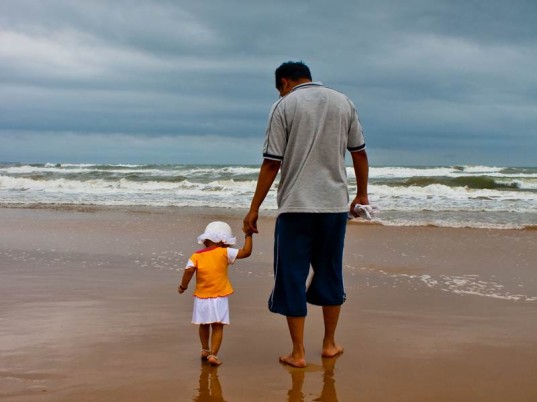
fatherhood misunderstood

"Fatherhood is pretending the present you love the most
is soap-on-a-rope."
--Bill Cosby--


If you are a father, today is your day! Get ready to celebrate! Clear some space for the cards and gifts your family has prepared for you--your reward for going off to work every day, for scrimping and saving, for keeping a roof over their heads and food on the table.

For teaching your children, for playing with them, and for sharing your stories with them.

"A father is a man who expects his son to be as good a man as he meant to be."
--Frank A. Clark--

For your bravery--the spiders you kill and the mice you banish, the dark shadows and strange noises you confront in the night.

For mustering a sense of humor when there is nothing to smile about.

For making the sacrifices no one sees.

And...for keeping stuff all bottled up inside.

For the wisdom you impart, for the trust you instill, for the rock of safety you represent...this day is for you.


Or not.

Because, maybe you didn't get it right. Perhaps your marriage failed, and your children have turned away...or been taken away...from you. Perhaps you lost your job...or your house...and a sense of failure stalks you like a hungry lion.


Perhaps your childhood demons have returned to haunt your own children. Maybe you found refuge in drink, or release in violence.


Perhaps you feel unneeded or unwanted. 

And you thought nobody noticed!


And what if you have lost your own father? What if you are a father who has lost a child?

http://honoringourangels.blogspot.com
"Grief is the price we pay for love."
--Queen Elizabeth II--

Who will remember you today? What does Father's Day mean to you? How will you celebrate the day?

Today I will remember my father--all he did and all he failed to do, what I knew of him and the secrets I believe he took to his grave, the times I cherish and some I prefer to forget.

Because this is the thing: He didn't know how important he was to me in my young life--the things he did for our family and the things he failed to do, the words he spoke and the silence he kept in his heart. The love that went unnoticed and the longings, unfulfilled.

If he were here today, I would forego the soap-on-a-rope, the shiny new golf balls, and the expensive silk ties.


I would tell him that I loved him because of who he was...and that I loved him inspite of who he was.

That I love him still.
*
"The most important thing a father can do for his children
is to love their mother."
--Rev Theodore Hesburgh--
*
"IT" happened again...and I'll tell you about it next week.
jan

ps.: I found THE PERFECT card for my husband, the father of my children, this year!!


Sunday, June 10, 2012

in training

This week I revised two chapters in my WIP. When I finished, I was surprised at how many changes I had made, keeping in mind the conventions that govern publishable works these days.


Using strong verbs. Eliminating adverbs and superfluous adjectives. Avoiding the past perfect tense, etc., etc. So...I'm learning. I have taught my ear to seek out these offenders...and retrained myself to appreciate the sound of the rewrite--its rhythm and flow. The prose sounds crisper and tighter, but it doesn't come easily to me.

The question is: how was my ear trained in the first place? Where did I learn to use the colorful adverbs and flowery adjectives that flow so naturally onto the paper for me? Who taught me about verb tenses?


http://permaculture.org

When did punctuation change? Why?

I went back to a couple of classics to see where the problem began. I turned to the small collection of books I enjoyed as a child, including Anne of Green Gables, An Old-fashioned Girl, Lad of Sunnybank, and The Yearling, among others. I also pulled out a couple of more contemporary pieces. I paged through them at random, and this is what I came across:
  • Hogan spoke to him cheerily...
  • ...the helplessly writhing head.
  • ...said meditatively, said resignedly, said smilelessly, said thoughtfully (all in the space of one page in Anne of Green Gables, possibly my favorite preadolescent read!)


  • ...sat up dizzily and answered uncertainly, hastily summoned, hurried wildly (also from Anne of Green Gables. Booooo!)
  • He put his hand on my shoulder again embarrassedly. (Hemmingway. Really?)
  • Jordan looked at him alertly, cheerfully...
  • ...was dancing, were sitting, were doing (all on one page in The Great Gatsby)


  • ...holding each other torturously, fashionably/dancing individualistically (same page from Gatsby)
  • ...sighed wearily, let her head fall heavily, laughed hysterically, looked at her clothing strangely...
Alas! The violations were too many and too frequent! Shame on them! My critique partners would be all over me if I brought this kind of thing in for them to read! Yet, this is how my ear was trained...

.


...to appreciate wordiness, to read passively, to flow with the melody rather than march to the percussion.

Now, when I revise a scene, I hunt down the word "was." I cringe at the "was verb-ing" construction. I try to chop everything that ends in -ly. I've been trained to avoid some fine words: suddenly, ever, even...innocent little connectors that fit the cadence of the sentence. I miss them, but I think I can live without them. It's starting to sound better to me, now. Finally.

The use of the comma still sometimes baffles me, though.


*
"Genius does what it must; talent does what it can."
--Edward Bulwer-Lytton--
*
Today I have the privilege of attending a book signing. One of my critique partners  has published his first paranormal thriller, Shepherd's Fall http://georgerappeltjr.blogspot.com! Proof that there is hope...
jan