Sunday, May 1, 2016

ten signs you're ready to begin

"Most of us have two lives.
The life we live, and the unlived life within us...
Are you a writer who doesn't write, a painter who doesn't paint,
an entrepreneur who never starts a venture?
Then you know what Resistance is."

This quote is taken from the book, theWARofART, by Steven Pressfield.

www.amazon.com

In it he talks about the excuses we concoct to defeat the creative urge within us. For example, instead of romancing our muse, most of us worry about financial security. We complain that we don't have the time to take on one more thing. We shun solitude at all costs. It's no wonder we never get anything started...or finished.

He goes on to say:

"If tomorrow morning by some stroke of magic, every dazed and benighted soul woke up with the power to take the first step toward pursuing his or her dreams, every shrink in the directory would be out of business. Prisons would stand empty. Domestic abuse would become extinct, as would addiction, obesity, migraine headaches, road rage, and dandruff."

Why? Because fear of failure, anxiety, pessimism and self-loathing are all bottled up inside, feeding us lies. Waiting to sabotage our first courageous efforts. You'd experience a little resistance, too, if you were trapped in there with all that negativity.

www.highlandhosp.com

If, instead, you prefer the company of dreamers, optimists, wishful thinkers, and self-starters then you should get in touch with your muse.

www.huffingtonpost.com

Whether your dream is to write, or paint, or compose, or perform, she can show you how to begin...or help you begin again if you've already given up. Remember:


Here are ten surefire signs you are ready:

--You're already in the habit of jotting notes on napkins, cashier receipts, or the back of your hand.
--You carry between five and ten pens with you at all times.
--You prefer to listen to the voices in your head than to engage in conversation with the person next to you.
--Somewhere stashed away in your house is a crate of moldering paints, petrified brushes, and unfinished canvases from who knows when.
--You haven't had the piano tuned for years and the books stored in the bench are starting to smell funky.
--The last thing you painted was the ceiling.
--The last time you sang in public was at the start of a ball game.
--Dread drops anchor with you some time after 3pm Sunday and doesn't lift until after 3pm Friday.
--You doodle on the back of corporate memos.
--Play is your idea of good honest work.

These are all tell tale signs that you have it in you no matter what you come up against. You already possess the desire, the spirit, and the tools to harness your creative energy.

www.acelebrationofwomen.org

The question is what will you do with yours?
*
"Why should we all use our creative power?
Because there is nothing
that makes people so generous,
joyful, lively, bold, and compassionate,
so indifferent to fighting and
the accumulation of objects and money."
--Brenda Ueland--
*
jan


Sunday, April 24, 2016

meet buttercup

Meet Buttercup:


I'll be walking her for the Central PA Animal Alliance until they can find a foster home, or better yet, a forever home for her.

A woman in North Carolina came across her during the winter, out in the cold, trying to keep her litter of newborn puppies warm. They'd all died.

So, to make a terrible situation worse...Buttercup ended up in a "kill" shelter. Thankfully CPAA rescued her. She is now living at Farm-View Kennels, about 20 minutes from where I live. They've been looking for volunteers to walk her. 

If you know me, you know I love dogs and I love to walk so, hey--it was meant to be!

I met Buttercup last week and I walked her on Saturday. She's such a sweetie. She was a little excitable when I first got there, but once we took off, she did fine. There are acres of pastureland around the kennel, so we had a good long walk--lots to sniff (she snorts like a pig when she finds something interesting to explore) and lots to see now that the birds and groundhogs are out.

Certain individuals, who will remain anonymous, are convinced I'll end up adopting her...but I'm holding out. Stoically.

You can find out more about Buttercup and her friends at www.farm-viewkennels.com. Also, check out www.cpaa.info/ . 

Remember:

www.pinterest.com
jan


Monday, April 18, 2016

are you a wave runner or a tree hugger?

Are you a wave runner...


...or a tree hugger?

www.commons.wikimedia.org

This issue came up over the weekend at a retreat I attended with a friend.

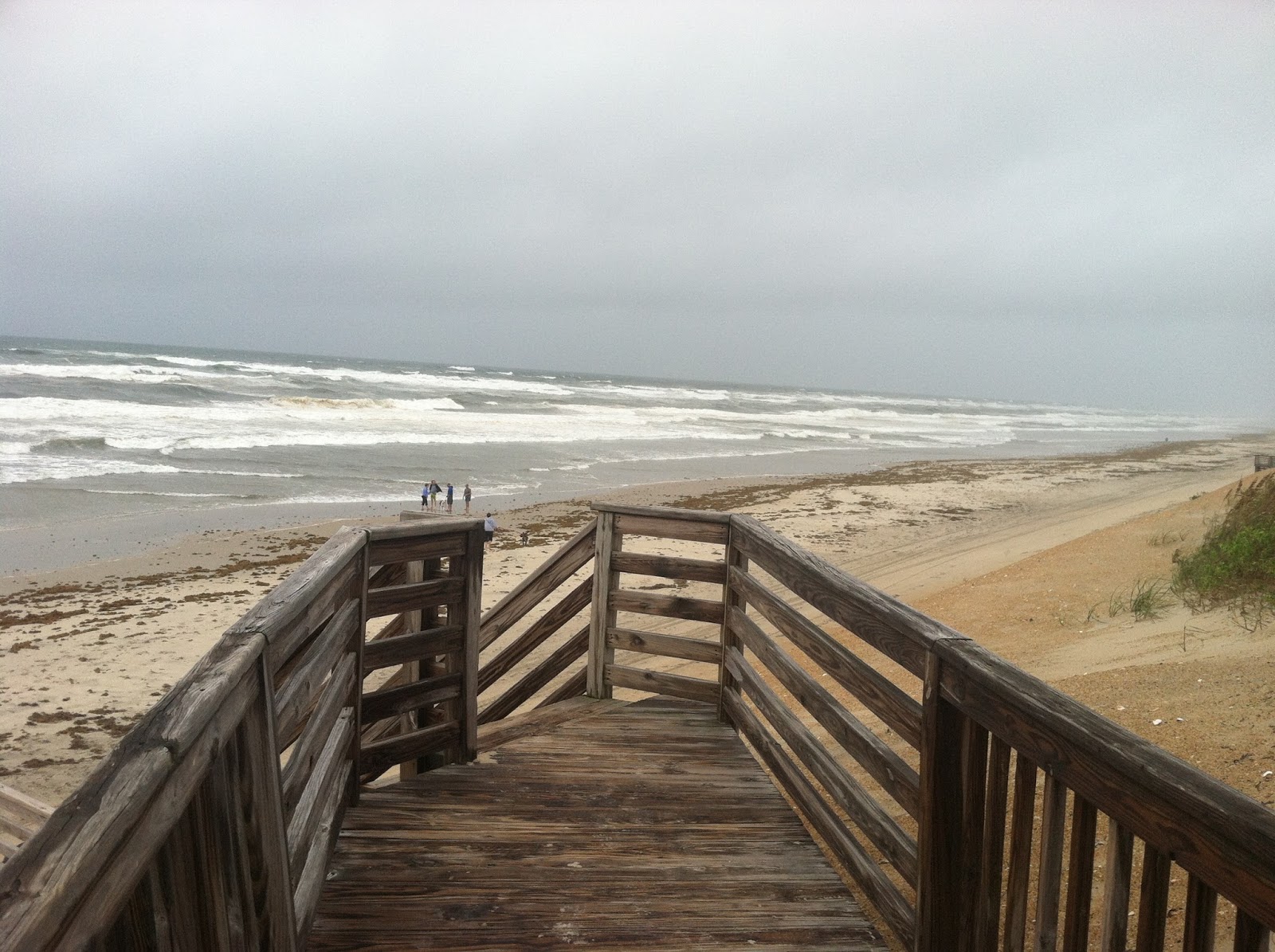
We found ourselves with some free time and we had to make a decision: Should we head over to the beach (even though it was too cold to put even a toe into the water), or should we head to the park and walk in the woods?

In the end, we ended up at the water's edge...because she had the car.

I am a tree hugger. I love the woods. When I need peace of mind or strength for the day, I like to lean on a tree. After all, trees are rooted deep in the the Earth. They survive right where they're planted, even though they don't have any choice in the matter. They weather the ravages of Mother Mature--wind, rain, and drought, and they change with the seasons. I think we can learn a lot from trees. They are wisdom, and strength, and support to me.


My friend, on the other hand, is a wave runner, drawn to the water. When we got to the beach, she kicked off her shoes and planted her feet in the sand. For her, the ocean is cleansing, soothing, rejuvenating.


She has her source...and I have mine. She prefers one thing...I prefer another.

This is important to understand if you're a writer. It raises the age old question: Are you a plotter or a pantser?

www.karentyrell.com

Do you sketch out your entire story before you write the narrative? Or do you plunge right into the story, then let it develop as you go?

I am a tree hugging pantser, myself. My mind wanders when I write. I can't work out every detail in advance. After all, how do I know where my characters will take me until they figure it out for themselves?
www.plymouthfoodpantry.org

Nevertheless, as hard as it is for me to outline a book, I gave it my best effort last week. I'm working on a non-fiction manuscript that, I thought, lent itself readily to an outline: Chapter--point, point, point. Chapter--point, point, point. The problem is I would start to make a point, but  the narrative would carry me away. I just kept writing until, before long, the whole chapter was written. I hadn't thought about what should come next. Before I knew it, I was pages into the book in true pantser form.

Plotting and outlining are as uncomfortable for me as a cold dip in the ocean, as water up my nose, as sand in my shoes.  I'll never be a plotter, any more than I'll ever be a wave runner. Remember:

www.society6.com

Do you prefer to frolic in the surf, or wander through the woods? Are you a wave runner, or a tree hugger? Are you a plotter or a pantser?
jan


Sunday, April 10, 2016

success is like a snowy day in April

A couple of weeks ago the thermometer hit 75 degrees. To celebrate the arrival of spring, the optimists among us dusted off our patio furniture and arranged it on the deck. We put our winter coats and woolen sweaters into storage. Some of us ran to the garden center to pick up some early bloomers.

Today we got snow.


Just when spring felt like a sure thing, it slipped away.

Success can sometimes feel the same way. You spend months at your desk, laboring over a manuscript, or a poem, or an essay. You plant yourself in your seat and write even though you'd rather be outdoors, or shopping, or visiting friends. You trudge through bouts of writers' block. You start to wonder if it's worth the effort. You just want it to be finished.

Then, one day you get that letter in the mail. You have a publisher! Your poem has won a prize! Your story is going to appear in print!

You celebrate the achievement as if you have uncovered the secret of success. As if it will be clear sailing for you from now on. As if nothing can stop you now...

...until the first rejection letter arrives. It feels a lot like a cold, snowy day in April.

Nevertheless it is inevitable that, sooner or later, spring will arrive. Which is why you must always:
www.metimeplease.com

Sooner or later, it will arrive.
jan


Sunday, April 3, 2016

finding the right words

As if writer's block weren't enough of a problem for hopeful authors, there's another obstacle we all encounter. It happens when we've already come up with a great idea--a beautiful setting or a compelling action scene. Even a sexual encounter. It comes to us intact in our mind's eye, ready for the page but for some reason we just can't find the words for it. The description sounds flat. The action feels sluggish. The romance lacks passion.

Mark Twain came up with one solution for this problem:

www.jarofquotes.com

But, there are other ways around the problem, too. Metaphor and simile work well...if you can come up with something fresh and new, not these old rags:

www.quotesgram.com

Instead, try something like this:

Telling the reader that something has reawakened her character's feelings of guilt, Ann Patchett puts it this way: "The great lumbering guilt that slept inside of her at every moment of her life had shifted, stretched."

And later, instead of describing her character as giving up, she writes: "The clear resolve she had had in the restaurant seemed to have broken like a fever in the night..."

The senses speak louder than adjectives. Don't tell me the man is angry...let me hear the teacup clatter on the saucer when his fist hits the table. Smell, taste, and feel your way through the story.
  • She smelled her own wooliness." (A woman, dressed for the winter weather she left in Minnesota, arrives in the steamimg Peruvian jungle, from "State of Wonder" by Ann Patchett.)
  • "The accent in Naples is like a friendly cuff on the ear." (from "Eat, Pray, Love" by Elizabeth Gilbert.)
  • "There is a sweetness about him. A bitterness. Something irresistible, like Swiss dark chocolate. Like good red wine." (from one of my drafts...)
In my last post I suggested you describe the color red. Like me, you may have come up with a few similes and metaphors: the color of blood, a ruby, a cherry. The color of the setting sun that promises fair weather. A color that angers a bull. A lost balloon.

www.shirt.woot.com


Then, I asked you to describe the color red to a blind person. I drew a blank. How did you do?

I still sometimes have trouble coming up with the right words. How about you?

www.quotesgram.com

jan


Monday, March 28, 2016

where to start your story

Whether you're just getting started as a writer, or you're a writer starting a new project, you soon learn to expect trouble. You may encounter difficulty knowing how to start your story. You may having trouble putting your best thoughts into words.You also learn to take well-meaning advice with a hefty dose of discretion. I'm not convinced that Ann Patchett or Elizabeth Gilbert would agree with Dean Koontz on this matter:

Nevertheless, I hear this in my critique group again and again: "The writing is good...but the story doesn't really begin until (let's say) page 37," when what they mean is the action or conflict doesn't begin until page 37. But those are two different things. In thrillers, fantasies, and mysteries the story may jump right into the action...but, in literary fiction, the author may first need to set the stage so the conflict that follows has a similar sense of urgency.

For example, in "Talk Before Sleep" by Elizabeth Berg, the story begins with casseroles in the refrigerator and the memory of hanging laundry on the line--pretty tame stuff until we learn that the protagonist is battling end-stage breast cancer. As she plumbs the depths of emotion and friendship, her story becomes as gut-wrenching as if it began like a medical thriller--with the first plunge of the scalpel blade and the blood stained surgical drapes.


In "The Far End of Happy," Kathryn Craft begins by describing the protagonist's diary. It's beautifully written, and familiar to anyone who keeps a journal. Nothing special until you learn that her marriage is coming to an end. Nothing to get excited about until you learn that her marriage ends with her husband's suicide. That comes later.


In Anne Tyler's "A Spool of Blue Thread," the story starts with an older couple getting ready for bed, the woman removing the hairpins from her topknot while her husband pulls his socks off. Ho-hum. Until the phone rings, and life as they know it changes in a heartbeat.


Emotional engagement is as important in literary fiction as explosive action is in sci-fi and thrillers. The conflict may not unfold right away, but the emotional energy builds just as convincingly whether the action begins on page 1, or page 15, or page 37. Begin with whatever draws the reader in. It might be emotional or psychological narrative, lyrical prose, or world-building. Don't worry yourself silly over the page numbers.


*
No matter how you start your story, you will sometimes have trouble finding the words to express what you know so well. 

www.quotesgram.com

For my next post, think about how you would describe the color red. Then describe it to a blind person.
jan


Sunday, March 13, 2016

unanticipated delight, deep contemplation, and pure joy

Not many people learn to love the woods in the winter. Not many people I know like winter at all.

Most of my friends avoid venturing out when the weather turns cold and snowy...when the landscape turns soft and deep and white. But then, not many of them are lucky enough to have a house in the woods with a stream behind it where the current curls into ripples that freeze hard around the stones and glitter in the sunlight. Beneath the ice.


We just see it differently.

Where I see soft gray shadows stretching out across a blank white canvas, they see sooty slush.


Where I see a fire crackling on the hearth, they see beach umbrellas and blankets.

When I head outdoors with a snow shovel, they gaze longingly at their golf clubs.


Last fall I decided to forego a gym membership in favor of continuing my fair-weather walking program. I bought a good waterproof jacket to wear in the rain, and I lined up sweaters, jackets, hats and mittens in case of snow. I reminded myself that when I was a kid, I was a die-hard skier. Nothing kept me away from the slopes--not drifting snow, not pelting sleet, not sub-zero temperatures.

So, this year I resolved to make this a walking winter. That was before I learned that it would be a mild one. That it would hold unanticipated delight and wonder. Deep contemplation. Pure joy.


Day after day I ventured out under a glacial blue sky.


The air was as still as if Mother Nature were holding her breath. Silence was interrupted only by the episodic barking of a dog in the distance, or a plane rumbling overhead. Never mind the fact that the Earth was spinning on its axis at a speed of over 1,000 mph and hurtling around the sun at a speed of over 18 miles per second.

www.blog.solarhaven.org

The air was still. The universe silent. The woods peaceful.

Now that the snow has melted, the temperatures have come up, and the birds are back, other delights await.

The near presence of the deer.


Birdsong. And before long, the fragrance of lilacs and honeysuckle...

...all of which is fine except that I still love the winter woods.

jan